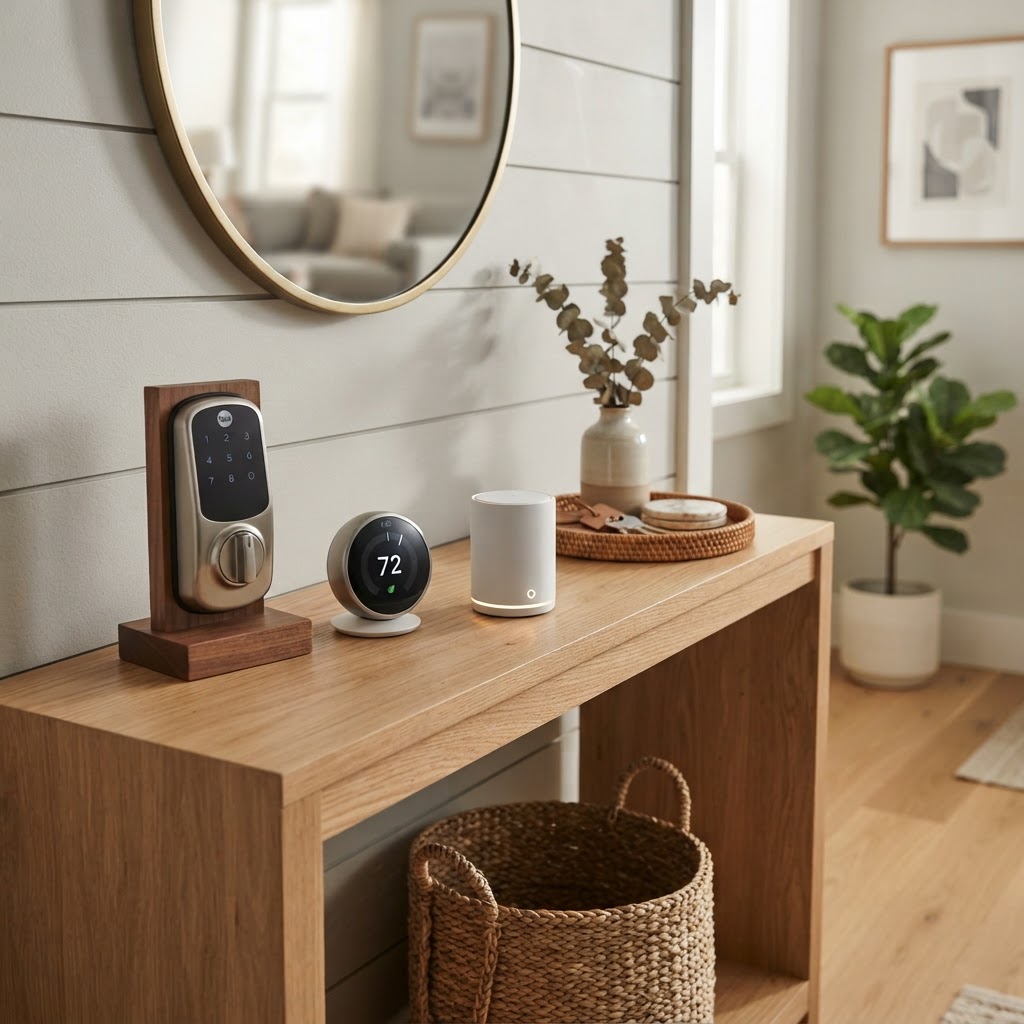
Smart home technology has become a real advantage for short-term rental hosts looking to streamline operations while improving guest experiences. The right devices save you time, reduce operational headaches, and protect the property when you are not there. Here are the essentials worth investing in, roughly in the order we would buy them.
Smart Locks for Seamless Check-In
Smart locks are the foundation of modern STR operations, eliminating key exchanges and lockout emergencies. Options like Schlage Encode Plus and Yale Assure Lock 2 let you generate a unique access code for each guest and monitor entry activity remotely. Most hosts find these pay for themselves quickly through time savings alone, and guests consistently praise the convenience of keyless entry. If you buy one thing on this list, buy this.
Water Leak Sensors in Critical Areas
These are cheap, boring, and probably the highest return per dollar of anything here. A small leak becomes a catastrophe when nobody is on site. Place sensors under sinks, near the water heater, and behind toilets to get an instant alert the moment moisture is detected. Early detection is the difference between a plumber visit and a insurance claim with displaced guests.
Smart Smoke and Carbon Monoxide Detectors
Beyond being required by most platforms and many local ordinances, interconnected smart detectors let you verify status remotely. Models like Nest Protect alert both you and your guests, and they help you maintain the compliance documentation platforms and insurers increasingly expect.
Noise Monitoring: Depends on the Property
Noise monitors track decibel levels without recording conversations, which keeps them compliant with platform policy, and devices like Minut and NoiseAware are the two names most hosts consider. For the right property they are genuinely valuable: large group homes, entertainment districts, pools and hot tubs, attached neighbors, or anywhere a permit depends on a documented noise response.
For an average two-bedroom in a quiet neighborhood, the case is much weaker. Weather and street noise generate false alerts, the disclosure can deter good guests, and every alert becomes a decision you have to make at night. We covered the full argument in our article on whether to use a noise monitoring system, which is worth reading before you buy one.
A Note on Buying Order
Smart home technology does not require a big upfront investment. Start with a smart lock and leak sensors, add compliant detectors, and only then consider anything else based on what your specific property and your specific market actually demand. Buying the full stack at once is how hosts end up with three subscriptions and one device they never check.
When a smart lock or thermostat goes offline, a reliable property maintenance partner keeps guest stays on track.